Ten minutes before your first proposal save you a week
The first payout is best configured while there is no rush. What to settle, and which of your two CCIs goes in the form.
Read more →
Living between two countries
Payroll lands on one date and the expense back home falls due on another. Between those two dates is where the amount that arrives gets decided, and almost nobody looks at them together.
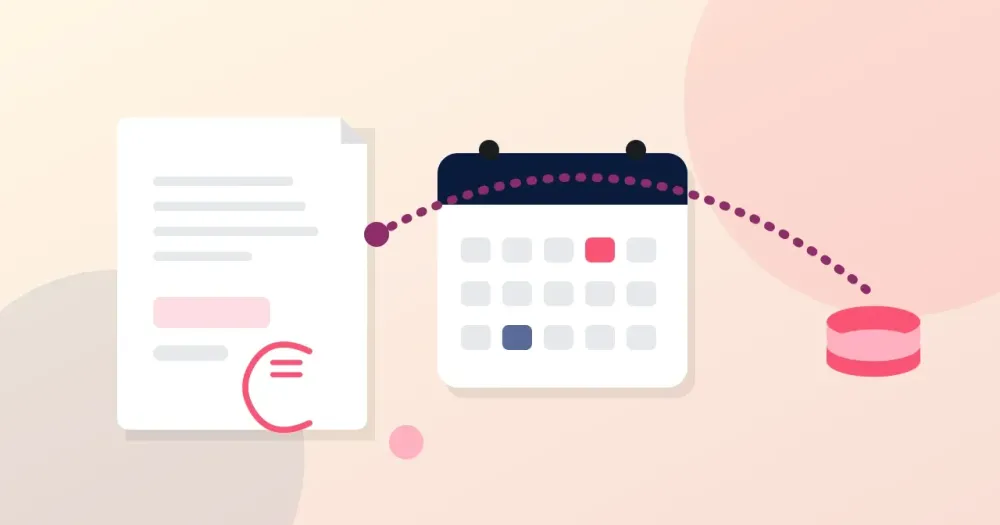
Payroll lands on a fixed day every month. Back home, your mother's rent falls due on another fixed day, and between those two dates there are four decisions almost nobody plans: where the money lands, how much stays with you, when it gets converted and when it leaves.
Most people make all four the night before the due date, with the app open and the family chat asking. It usually works. The difference between doing it that way and doing it with a plan barely shows from one month to the next, and shows up clearly once you add up the year.
Your employer transfers to an account you register with the people team. That single detail settles two things you cannot change on the fly later: which currency you receive, and how fast.
If the destination you registered does not take euros, someone converts for you along the way, at whatever rate applies that day, and all you see is the result. Three things worth checking before your first payday:
Looked at one by one, every transfer feels like an isolated case: this month the rate was odd, this month the bank was slow and less arrived without your knowing why. Looked at together, the twelve transfers of a year are a routine with four moments, and each one settles something different.
| Moment | What you do | What gets settled |
|---|---|---|
| Before the first payslip | Check the destination and how your name is spelled | That the money arrives without going under review |
| The day you get paid | Set aside the part that goes home | That it does not get spent before it leaves |
| When the rate works for you | Convert that part into local currency | The amount that will actually arrive |
| With room before the due date back home | Send | That it arrives on time even with a holiday in between |
Separating the second moment from the third is what changes the yearly math most. While the money arrives in euros and gets converted the same day, the exchange rate on payday decides for you. With the balance already in euros and in your name, the timing of the conversion becomes your call.
If what you are covering is rent, school fees or medication, the amount that matters is in local currency. Set it there and let the system work out the euros required. The other way around, always sending the same euro figure, one month there is extra and the next it falls short without anyone having done anything wrong. The full reasoning is in converting your salary to pesos does not tell you if you are better off.
There is no good route and bad routes in the abstract. There are routes with more legs and routes with fewer, and every leg is a chance for someone to convert.
| Route | Conversions | What to watch |
|---|---|---|
| European bank → international transfer to a local account | At least one, outside your control | The amount that shows up at the end; intermediary banks can take a cut along the way |
| Cash remittance counter | One, at that day's counter rate | How much is collected on the other side, more than the rate on the window |
| Euro balance in your name → conversion when you decide → payout to a local account | One, and you pick the moment | That the local destination accepts the account holder you plan to use |
The honest comparison is not between advertised exchange rates but between final amounts: how much lands in the destination account once the whole route is done. It is the only figure you can check without relying on what each leg says about itself, and we cover it in the mistakes eating your money every time you send it home.
At BNKA that route is two steps inside the app: the swap from euros into local currency, and the payout to the destination account. Corridor details are in Argentina, Peru and Colombia, and each pair's reference in EUR/ARS, EUR/PEN and EUR/COP. Worth spelling out: BNKA is a technology platform. The European IBAN is issued by a regulated partner institution, and the conditions in force for each operation are in the app and in the terms and conditions, which is where to check them before moving money.
This is where most people get stuck, because the answer changes with the destination country. There are two different situations and it helps not to mix them up.
One is sending to an account of your own back home: the money stays yours end to end. The other is sending to a relative's account, which is what most people supporting someone there actually do. Which account holder each destination accepts depends on the corridor, and it is worth checking in the app when you save the account, not on the day you send.
What never works is the reverse: receiving other people's money in your account to pass it on afterwards. Even when the request comes with the best of intentions, that is the pattern we describe in the scams that hit Latinos in Spain hardest, and it ends with a frozen account and money going nowhere. What happens on our side when a review is triggered is in why an account goes under review.
Timings are not a single number because not every leg travels on the same rail. A euro transfer inside the SEPA zone and an international transfer routed through intermediary banks are not playing the same game, and on top of that come business days, each leg's cut-off times, and public holidays, which rarely line up between two countries. It is covered in why one transfer arrives in seconds and another takes three days.
The practical consequence is simple: you do not schedule the transfer for the due date back home. You schedule it earlier, with enough room that a local holiday does not turn into a late payment charge.
Two documents a month and one folder: the payslip and the transfer receipt. It takes a minute and it covers all the boring things that show up later, from a rental application to a residence renewal.
One case deserves extra attention. If some month the amount breaks your usual pattern, because a bonus came in, or a severance payment, or money from a sale, keep the document that explains it. Income that breaks the pattern can open a check, and having the paperwork ready is the difference between settling it over a few messages and waiting a week.
This is not financial, legal, tax or investment advice.
If you do not have a permanent contract yet and you invoice on your own, the route is in getting paid through Deel in euros. And if the person you support is a student, we cover the reverse case in how family money reaches you without getting held.
It depends on the corridor: which account holder each destination accepts changes by country, and it is worth checking in the app when you save the account rather than on the day you send. What never works is the reverse, receiving other people's money in your account to pass it on afterwards: that ends with a frozen account.
That is not a recommendation we can make for you, because it depends on which currency you spend in. The operational point is general: if part of your spending is in euros, converting the whole amount into local currency on payday is a decision, not a formality. What changes the yearly math is that the conversion date stops being payday.
Because not every leg travels on the same rail. A euro transfer inside the SEPA zone and an international one routed through intermediary banks have different timings, and on top of that come business days, each leg's cut-off times, and public holidays, which do not line up between the two countries.
A regular, stable transfer is exactly what raises the fewest questions. What can open a check is a month that breaks the pattern: a bonus, a severance payment or money from a sale. Keeping the payslip and the transfer receipt every month is what shortens that check when it comes.
The first payout is best configured while there is no rush. What to settle, and which of your two CCIs goes in the form.
Read more →A first payout from Colombia asks for more details than most people have at hand. Where each one lives, and which one is accepted wrong without…
Read more →Your first proposal gets accepted and your profile is half filled in. What to settle beforehand, because afterwards the corrections arrive too late.
Read more →Start today
Open your account from your phone in minutes and discover the services available to you.
Free download · Sign up with your passport · Exchange rate shown before you confirm