In Colombia the money lands in pesos, whatever you decide
Comparing ways to send money to Colombia by the fee leaves out what weighs most: the money is handed over converted into pesos, and four account…
Read more →
Borderless money
Sending money between countries is a daily necessity for many people. But doing so through the traditional system is usually slow, expensive and unsuitable.

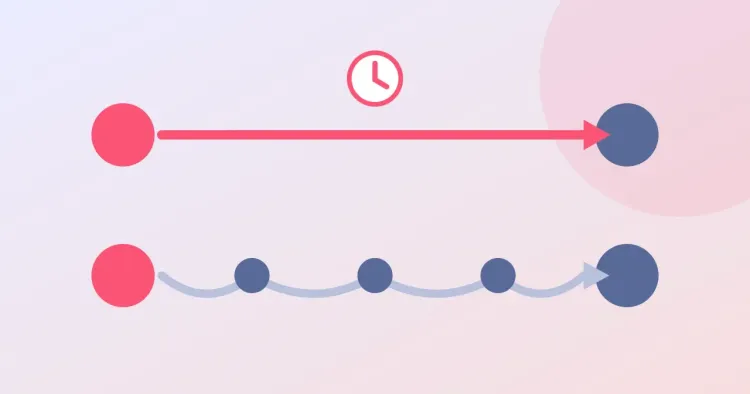
Moving money between countries the classic way tends to be slow and opaque. There is an exchange rate you do not see until afterward, intermediaries that can deduct charges from the amount in transit, and timings that depend on how many institutions sit in the path. The detail of why that happens is in SEPA, SWIFT and how long a transfer really takes.
The swap solves one specific part of that problem: the currency exchange.
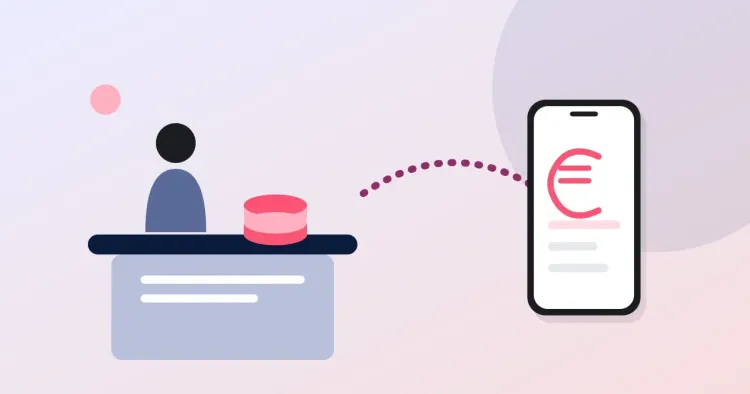
A swap matches two opposite needs. Someone holds euros and wants Colombian pesos; someone else holds Colombian pesos and wants euros. The platform connects both sides and guarantees the transaction.
Funds are locked during the operation to secure settlement, and once both sides are confirmed the exchange executes. The money does not cross a border: what changes is the currency your balance is expressed in. That is why a swap does not inherit international transfer timings.
Two things: the pair's quote at the moment of the query, and the margin applied to that pair. Nothing else.
The app shows the applicable rate before you confirm, and that is the one that executes. Each pair has its own page with the detail: euro and Argentine peso behaves differently from euro and Peruvian sol, because activity is not the same on each pair.
What that margin, or spread, actually is is defined in the glossary.
| What to check | Why it matters |
|---|---|
| The applicable rate for the transaction | It is the one that executes, not a market reference. |
| The amount left in the destination currency | It is the only number that lets you compare providers. |
| The currency you are going to spend | Converting twice costs twice as much as converting once. |
| The beneficiary name, if you will transfer afterward | A name that does not match stops the later payment. |
That last point causes the most held transactions, and it is explained in why an account goes under review.
When there is no match available for your pair and your amount, the order stays open and executes when one appears. The balance is still yours while it waits, and you can cancel.
On pairs with less activity the wait is longer. And there are moments when a specific corridor is not operating because of the local provider: when that happens, it is flagged in the app.
It is worth not mixing them. The swap changes the currency of your balance. The transfer moves that balance to a local account in the destination country, on that country's rail, with its hours and its requirements.
The detail of the local leg is on each corridor page, for example the Colombia corridor. And the mistakes that cost the most when sending money home are in this guide.
It is not an investment product and it carries no recommendation about when to convert. The platform's role is operational: show the applicable rate and execute what you decide.
If what you want is to understand what moves the euro before deciding, it is in why the euro is moving. And the conditions and limits of each transaction are published in the FAQ.
Informational content. This does not constitute financial, legal, tax or investment advice.
It is a switch of your balance between two currencies inside the platform. Your balance goes down in one currency and up in the other, at the rate shown before you confirm. The money does not travel: what changes is the currency your balance is expressed in, which is why a swap does not depend on international transfer timings.
From the pair's quote at the moment of the query, plus the margin applied to that pair. That margin is the part worth comparing between providers, and the only honest way to compare it is to look at how much ends up in the destination account, not the advertised percentage.
The order stays open and executes when a counterparty appears for that pair and that amount. While it is open the balance is still yours and you can cancel. On pairs with less activity the wait is longer, and at times a corridor may not be operating due to the local provider.
No. It is an operational tool for holding your balance in the currency you are going to spend. The app shows the applicable rate and you decide; there is no recommendation on when to convert or which currency to hold. This does not constitute financial, legal, tax or investment advice.
Comparing ways to send money to Colombia by the fee leaves out what weighs most: the money is handed over converted into pesos, and four account…
Read more →Comparing routes for sending money to Argentina by the fee leaves out what actually stops a transfer: what kind of account the money lands in, and…
Read more →Comparing ways to send money to Peru by the fee leaves out what weighs most: whether the money arrives at a counter or in an account, and what the…
Read more →Start today
Open your account from your phone in minutes and discover the services available to you.
Free download · Sign up with your passport · Exchange rate shown before you confirm