NIE and TIE in Spain: differences, requirements and how to apply
The NIE is your foreigner number in Spain and the TIE is the card that proves your legal status if you stay longer than six months. What each one…
Read more →
Living between two countries
A licence from Argentina, Peru or Colombia is only valid for six months once you become resident in Spain. Here is how to exchange it: requirements, documents, DGT fees and steps.
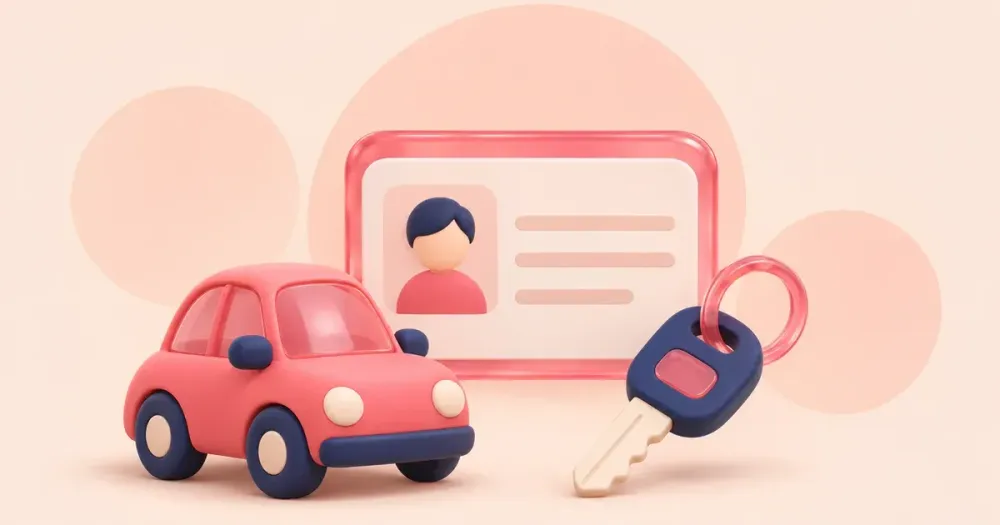
Exchanging your driving licence in Spain means swapping a licence issued in Argentina, Peru or Colombia for the equivalent Spanish one, with no new test if you only drive a car or a motorcycle. You need it if you live in Spain and want to keep driving, because a foreign licence is only valid for six months from the day you acquire residence. You apply to the Dirección General de Tráfico (DGT), online or by appointment at a provincial or local traffic office.
Spain has an exchange agreement with all three countries, so the route exists. The DGT asks for these conditions:
The six-month limit is the detail most people find out late. During that time you can drive on your home licence. After it, the licence no longer counts for driving in Spain, even if it is still valid in your country, and the exchange is the only way to stay behind the wheel. Start early, because parts of the process depend on papers or replies coming from your home country.
If your licence comes from a country with no agreement, there is no exchange and you have to earn a Spanish licence from scratch.
The general requirements are the same, but the route changes depending on where the licence was issued. This summary uses the data the DGT publishes:
| Country | Agreement in force since | How it starts | Car and motorcycle | Lorry and bus |
|---|---|---|---|---|
| Argentina | 31/07/2002 | Direct application, with apostilled certificate | No tests | Driving test |
| Peru | 28/01/2004 | The route the online office shows when you pick the country | No tests | Driving test |
| Colombia | 31/07/2003 | Prior verification with Colombia and locator number | No tests | Specific test and driving test |
For car, motorcycle and light vehicle licences (A1, A, B and B+E) the exchange is direct in all three cases. Lorry and bus licences (C and D) call for extra tests and a different medical check.
On top of the common paperwork, the DGT asks holders of Argentine licences for a certificate of authenticity and seniority of the licence. You request it at the Argentine municipality where you got your licence and then have it legalised or apostilled with the Hague Apostille. It is the paper that most delays people who are already in Spain, because it has to be handled over there. If you have not travelled yet, bring it with you. If you are already here, the usual solution is a relative who requests it and sends it over.
The Colombian exchange runs in two phases. First you ask the DGT to verify with Colombia that your licence is valid. When Colombia replies positively, you receive an email with the confirmation and a locator number, and with that number you file the exchange application. The DGT warns that the email can take several days or even weeks, depending on how long the reply takes. Only the licence holder can request the verification. The exchange application that follows can be filed by a representative.
Peru deserves a second look. The DGT online office has an exchange page titled for Argentina, Peru and Uruguay, which describes a direct application with no prior verification. At the same time, as of November 2026, the country selector in that same online office sends Peruvian licences to the page for the procedure with prior verification and locator number. Both pages are official and they do not match, so take nothing for granted: open the digital exchange service, choose Peru as the country of origin and follow the route the system gives you that day.
The official list is short. Bring originals and, if you go in person, photocopies too:
The traffic office handling your file can ask for any other document it considers necessary.
On timing, the DGT mentions roughly a month and a half to receive the final licence. It also makes clear that an application filed through the registry is not automatic and that it cannot guarantee a time frame. If you cannot attend, someone else can act for you through the DGT powers of attorney register or, in person, with the signed representation form. You can check the status of your file in the online office.
The DGT agreements table, updated on 26 June 2026, lists these amounts, in force as of November 2026:
| Type of exchange | Fee code | Amount |
|---|---|---|
| Car and motorcycle, no tests | 2.3 | €28.87 |
| Lorry and bus, with tests | 2.1 | €94.05 |
Fees get revised, so confirm the amount in the online office before paying. At the counter you can only pay by card, never in cash. Online you pay inside the same form, or enter the number of a fee bought earlier.
Add the medical check, which each centre prices on its own and has no single official cost. For Argentine licences, count what the certificate and its apostille cost over there. A relative often covers that in pesos and you pay them back later. To move money between Europe and home while the process runs, BNKA is one of the options: see how to send and receive money, how the USD account works, and the routes to Argentina, Peru or Colombia.
One practical warning: the exchange is handled only through the DGT online office or its own counters. Be wary of websites that charge for getting you an appointment or promise a guaranteed exchange. There are more guides for newcomers on the BNKA blog.
These are the mistakes that most often delay an exchange:
A note for professional drivers: if you work, or are about to work, for a transport company, the DGT allows the company itself to file the exchange.
DGT procedures change and each traffic office can ask for additional documents. Check the online office on the day you file your application.
Worth stating plainly: BNKA is a technology platform. Financial services are provided by regulated partner institutions, and the terms in force for any given operation live in the app and in the terms and conditions.
This is not financial, legal, tax, or investment advice.
Six months at most, counted from the day you acquire normal residence in Spain, according to the DGT. After that the licence stops being valid for driving here even if it is still in force back home, and you need the exchange to keep driving.
Not for cars, motorcycles and light vehicles (A1, A, B and B+E): the exchange is direct. For lorries and buses (C and D) the DGT requires extra tests. Its agreements table lists a driving test for Argentina and Peru, and a specific test plus a driving test for Colombia.
No. The DGT states that a licence obtained in the country of origin when the holder was already a legal resident in Spain cannot be exchanged. That is why the file includes a document showing you did not live here when you got it.
No. When you finish the process at the traffic office you hand over your original licence and receive a provisional permit you can drive with. The final card is posted to your home; the DGT mentions roughly a month and a half.
The NIE is your foreigner number in Spain and the TIE is the card that proves your legal status if you stay longer than six months. What each one…
Read more →What Spanish nationality by residence asks of people born in Argentina, Peru or Colombia: two years of legal residence, the CCSE exam, apostilled…
Read more →When a foreign university degree has to be homologated in Spain and when equivalence is enough, which documents you need, what the fee is, and how…
Read more →Start today
Open your account from your phone in minutes and discover the services available to you.
Download the app · Sign up with your passport · Exchange rate shown before you confirm